

ONLINE & IN-PERSON THERAPY IN TEXAS AND ILLINOIS
Childhood Trauma Therapy for Individuals

“My Parents did their best..”
“It was not that bad. I should just grow up..”
Has this thought ever crossed your mind and made you hesitant to seek help?
I get it. You don’t have to choose between loyalty and healing.
It’s okay to hold both gratitude and grief about your childhood.


Therapy for Childhood Trauma/Healing the Mother Wound
Many people feel torn between gratitude for their parents and the grief of unmet needs. It’s possible to honor the good while still tending to what hurt.
I support adults in healing from childhood trauma and exploring early relational wounds—especially those quietly shaping their adult lives. Whether you’re aware of a mother wound or just beginning to notice patterns that don’t feel like your own, our work together will help you uncover limiting beliefs, your childhood strategies, and unconscious roles that may have formed in your earliest relationships.
Healing the mother wound isn’t about blame—it’s about becoming conscious of the patterns we inherited and learning to make choices that reflect our true desires. Through this process, you’ll cultivate a more nurturing inner voice and reclaim the strength to live in alignment with your authentic self.
“I can’t do this, because..”
“I will do it later..”
“Forget about it (me)”
“What’s the point?”
Therapy for Self-Sabotaging Patterns
Did you know that both overachieving and underachieving—though they seem like opposites—often stem from the same root? Early emotional wounds and a pattern of minimizing your own needs.
As a childhood trauma therapist, I help adults identify and heal the self-sabotaging patterns that keep them stuck.
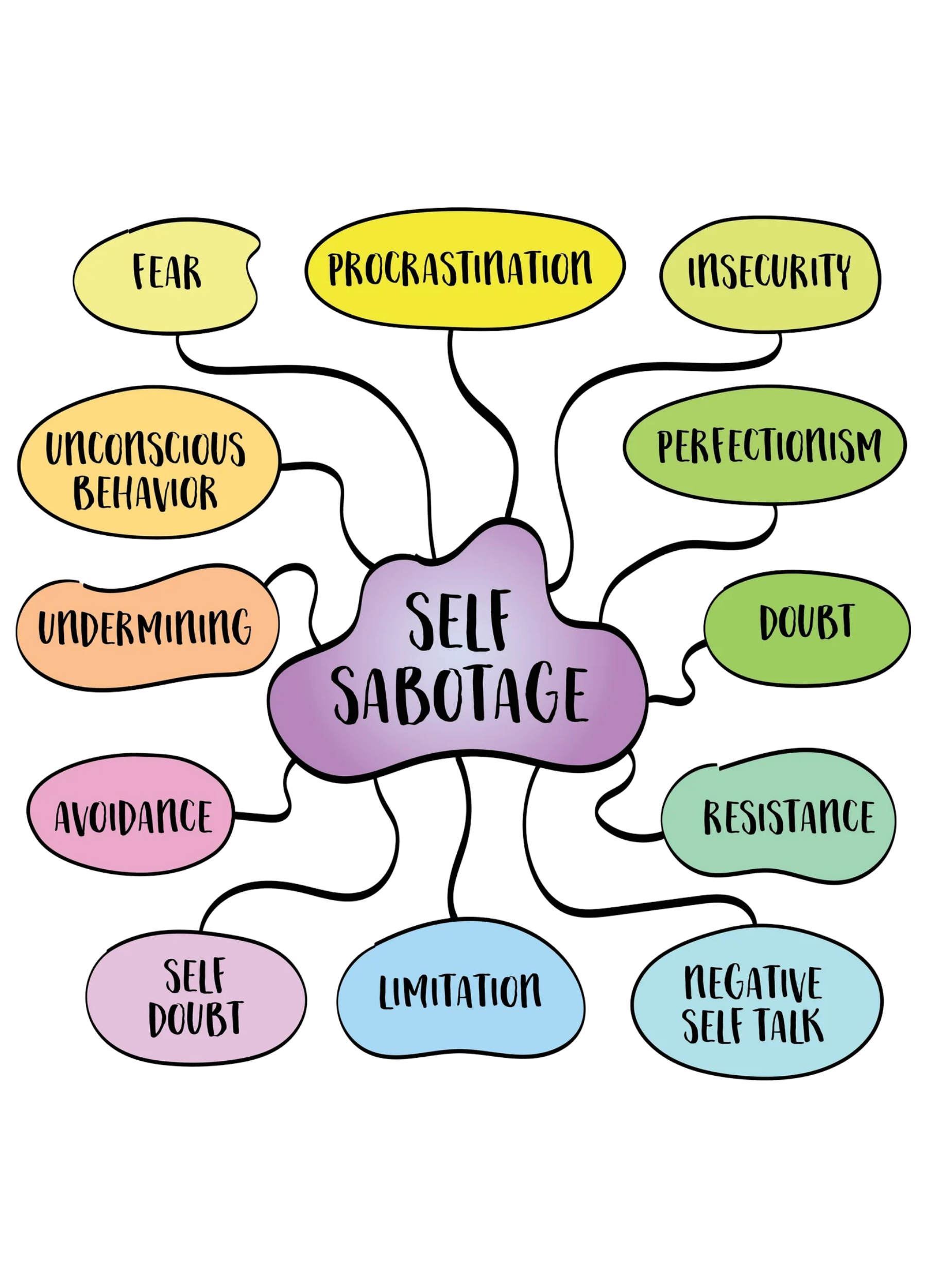
Self-sabotage is any behavior—conscious or unconscious—that blocks your growth, desires, or well-being. It can show up as:
Avoidance-Based Self-Sabotage: Procrastination, Numbing, Indecisiveness, and Perfectionism
Approval-Seeking Self-Sabotage: People-Pleasing, Conflict avoidance, Over-apologizing, and Over-giving
Overthinking-Based Self-Sabotage: Rumination, Over-preparing without taking action, and Chronic Self-doubt
Whether you're doing too much or not enough, therapy can help you uncover the deeper beliefs behind these patterns, create lasting change from the inside out, and start choosing yourself.
Individual Therapy
A space to unlearn old patterns and rediscover your true self.
Through trauma-informed and art-based therapy, we’ll explore how early experiences shaped your beliefs, your coping strategies, and the ways you learned to keep the peace or stay small. Together, we’ll uncover those patterns with compassion and create space for your true self to lead.
This process is about returning home to yourself — reconnecting with your body, intuition, and needs, and living in alignment with who you truly are.
What to Expect:
50-minute sessions (in-person in Austin, TX or virtual throughout TX & IL)
Root-cause healing for childhood trauma, people-pleasing, perfectionism, and self-doubt
A compassionate, collaborative process that supports you from where you are to where you want to be

Frequently Asked Questions
-
Yes, I’m licensed to provide therapy in both Texas and Illinois.
I offer in-person sessions in Austin, Texas, and virtual sessions for clients located anywhere in Texas or Illinois.
-
During our intro call, we’ll talk about what’s bringing you to therapy and what you’re looking for. I’ll share how I work, answer any questions you have, and go over details like rates and availability. You’ll get a feel for what it’s like to work together—and if it feels like a good fit, we can schedule your first session.
-
I do not accept insurance at this time. However, if you have out-of-network benefits, your insurance company will typically reimburse 60–80% of the session cost after you’ve met your deductible.
I’d be happy to check your benefits for you—just have your insurance ID number ready during our intro call!
-
If you have out-of-network benefits, your insurance company will typically reimburse you for 60-80% of the cost of each session after you’ve met your deductible.
I’d be happy to check your benefits for you! Just make sure to have your insurance card handy, with your Member ID, during our free intro call.
Or if you prefer, you can confirm the benefits of your health insurance plan, with your insurance provider directly. Just call the number on the back of your health insurance card listed under Member Services.You can ask them the following questions:
Do I have out-of-network outpatient mental health coverage? Am I able to use these benefits for telehealth?
What is my out-of-network deductible?
How much of my deductible has been met this year?
Do I need a referral from an in-network provider to see someone out-of-network?
What percentage of outpatient psychotherapy sessions are covered per session?
How do I submit claim forms for reimbursement?
How long does it take for me to receive reimbursement?
-
Yes, I reserve a limited number of sliding scale spots in my schedule. If you do not think you can afford my full fee, please don’t hesitate to contact me.
If I’m unable to offer you a sliding scale spot, I’d be happy to offer referrals to trusted clinicians in the area.
If you’re hoping to find an in-network provider, www.psychologytoday.com is a great resource.
-
The number of therapy sessions depends on your individual needs and goals. For short-term support, I often recommend starting with 8–10 sessions to assess progress and address immediate concerns. Many clients meet their goals within about 6 months and feel ready to conclude therapy. Others—especially those committing to heal from early relational wounds or childhood trauma—choose to continue longer for deeper, ongoing support.
We’ll take time in our first 2–3 sessions to clarify your goals and create a personalized therapy plan that works for you.
-
In our initial session, we’ll explore what brought you to therapy at this point in your life. I’ll ask some questions about your background and the concerns you're currently facing, to better understand your story. You don’t need to prepare anything in advance or worry about saying the “right” thing—I’ll meet you where you are and help create a space that feels safe, supportive, and grounding.
-
Absolutely! Art therapy doesn’t require artistic talent. In fact, clients who may initially feel they aren’t suited for art therapy often experience powerful breakthroughs, as they can express themselves more freely without the interference of learned skills. This process can lead to insights and realizations that might be more difficult to access through talk therapy alone.
-
Yes. I offer in-person sessions in Austin, Texas, as well as virtual therapy for clients throughout Texas and Illinois.
Whether we meet online or in person, the process is the same — gentle, collaborative, and centered around your needs. Many clients appreciate the flexibility of virtual sessions, while others enjoy having a calm, dedicated space for in-person work. We can decide together what feels most supportive for you.
-
Typically my clients are individuals, however family sessions are available upon request.
-
Art is an intuitive language for the parts of you that words don’t always reach. In individual therapy, we’ll use art to explore childhood strategies and try on new, healthier ways of relating to yourself.
Our bodily sensations — our interoception — shape the tone, rhythm, and quality of our behaviors. Staying small may have been a necessary childhood strategy, but shifting from staying small to taking up space can feel unfamiliar or even lead to freezing. Art-making and expressive therapy help you attune to these sensations and gently experiment with your own art of “taking up space,” deepening both insight and experience.
“Wow… I didn’t realize staying small takes this much work, and how simple taking up space can be when I just let myself be.”
“I didn’t realize being transparent could look so interesting instead of messy.”
“Taking up space feels so freeing.”
You might be surprised by how different your art of staying small is from your art of taking up space.
In the Inner Mothering Group, creative reflection is a core part of the process. Each session includes one art or writing activity to help you process and express what you’re learning. You don’t need to be artistic — the goal isn’t to create something beautiful, but to connect more deeply with yourself.
-
You’re always welcome to share as much or as little as feels comfortable for you. Many participants find it easier to start by sharing about their artwork or art-making process, which can feel more natural than talking about themselves right away.